Hood cleaning report template
A complete kitchen exhaust cleaning report and Certificate of Performance, as a free sample PDF. Use it as a checklist for your own form, or make one with your logo in two minutes.
Sample report. Fictional company and kitchen. 10 pages, about 1.3 MB.
What the report should contain
- Cover and summary
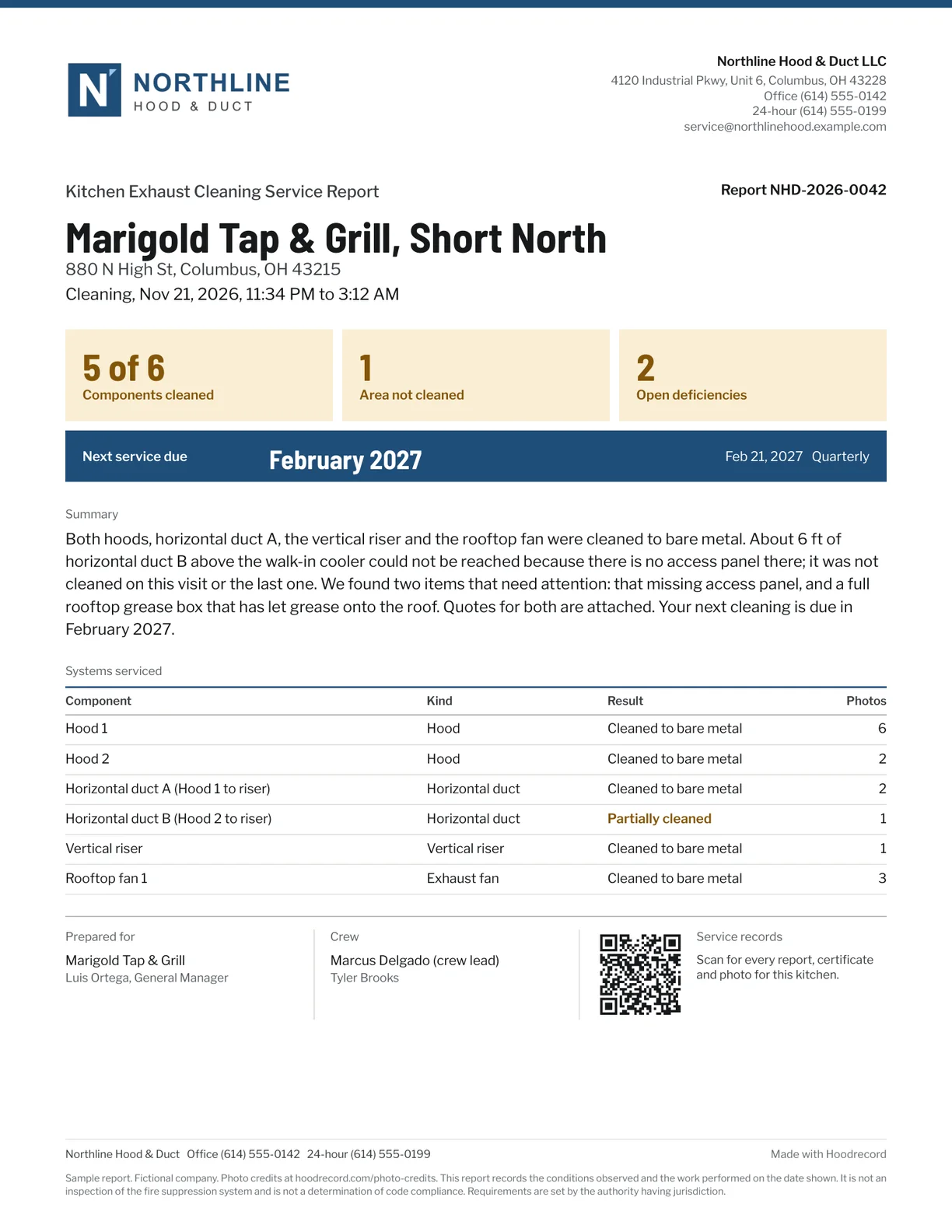
- Report number, service type, date and time in and out, the restaurant and address, the crew, a table of every hood, duct and fan with its result, and the next service date.
- Certificate of Performance
- One page kept on the premises: cleaning company, 24-hour phone, establishment, systems serviced, technician and certification number, areas not cleaned (or the word None), deficiencies found, next service due and signatures.
- Areas inaccessible or not cleaned
- Each area with the component, the location in plain words, the reason and a photo. NFPA 96 and the California Mechanical Code ask for a written report of areas that were inaccessible or not cleaned.
- Deficiencies
- Numbered, with severity, what was seen, the recommended fix and a photo. Items open from earlier visits are listed with the date they were first found.
- Photos per component
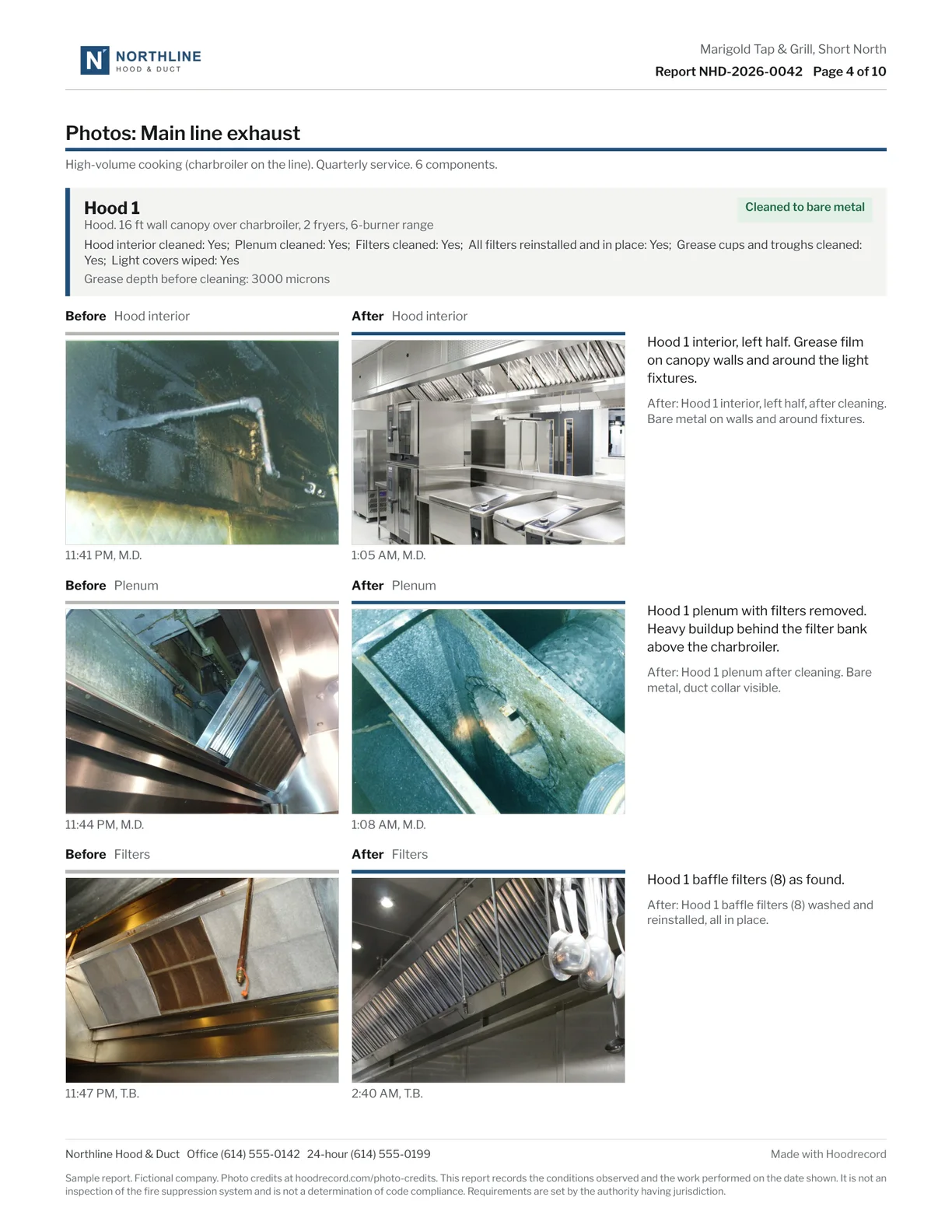
- Before and after pairs side by side for each hood (interior, plenum, filters), each duct at an access panel, the riser and the fan wheel, with capture time and initials.
- Checklist
- Before service, per hood, per duct, per fan and after service, answered Yes, No or N/A, with a comment for every No.
Reasons for areas not cleaned
A pick list keeps the wording the same on every report and every visit:
- No access panel
- Access panel blocked
- Panel fasteners seized
- Fan not hinged, cannot tip safely
- Roof access not provided
- Ceiling or wall blocks reach
- Equipment could not be moved
- Out of scope per contract
- Time ran out, return visit booked
- Unsafe condition
How often: the NFPA 96 schedule rows
State and city fire pages quote the NFPA 96 inspection schedule with these rows. Section numbers change between editions, so quote the row, not the number.
| Row | Frequency |
|---|---|
| Systems serving solid fuel cooking operations | Monthly |
| Systems serving high-volume cooking operations, such as 24-hour cooking, charbroiling, or wok cooking | Quarterly |
| Systems serving moderate-volume cooking operations | Semiannually |
| Systems serving low-volume cooking operations, such as churches, day camps, seasonal businesses, or senior centers | Annually |
A checklist to start from
Before service:
- Cooking equipment off and cool
- Power to exhaust fans locked out and tagged out
- Fire suppression system left operational; nozzles and detectors protected
- Work area tarped
After service:
- Access panels replaced and secured
- Filters reinstalled
- Fan power restored and fan running
- Appliances and switches restored
- Suppression system protection removed
- Rags and debris removed
- Kitchen left clean
- Service label applied near the hood
Words to avoid on a report
Write "cleaned to bare metal where accessible", not "100% clean". Write "service report", not "certified report". A cleaning report records the work and the conditions seen; compliance is decided by the authority having jurisdiction.
Make it on the phone instead
Hoodrecord fills this report from the photos and taps your crew already makes, with your logo, and keeps each kitchen's hoods, ducts, fans and open items for the next visit.